Out in the wild or at home, it’s a question that comes up a lot:
Can you safely pour hot or even boiling water into a Nalgene bottle?
Good news — yes, you can. Nalgene bottles are built tough. The same qualities that make them trail-ready also make them heat-ready. Whether you’re making camp coffee, stuffing a bottle in your sleeping bag for warmth, or prepping a quick trail meal, Nalgene bottles can handle the heat without warping or leaking.
In this post, we’ll break down why hot water is safe in your Nalgene, how to use it safely without damaging your bottle, and a few smart ways to put that hot water to work on your next adventure.
What are Nalgene Bottles Made Of
When it comes to durability and safety, Nalgene doesn’t cut corners. Our Nalgene Tritan Renew Water Bottles bottles are made with material derived from 50% plastic waste (using ISCC certified mass balance). Sustain® is a durable, BPA/BPS-free plastic that’s trusted in everything from lab equipment to baby bottles. It’s strong, lightweight, and holds up under high temps, including boiling water.
Some other models, such as the Ultralite, are made from HDPE (high-density polyethylene), which is also safe for hot liquids.
No matter which bottle you pick, if it’s a current Nalgene bottle, it’s made to handle both freezing and boiling temps without cracking, leaking, or melting. That’s part of what makes Nalgene a go-to in harsh environments, from alpine routes to backcountry campsites.
Can You Put Hot or Boiling Water in a Nalgene?
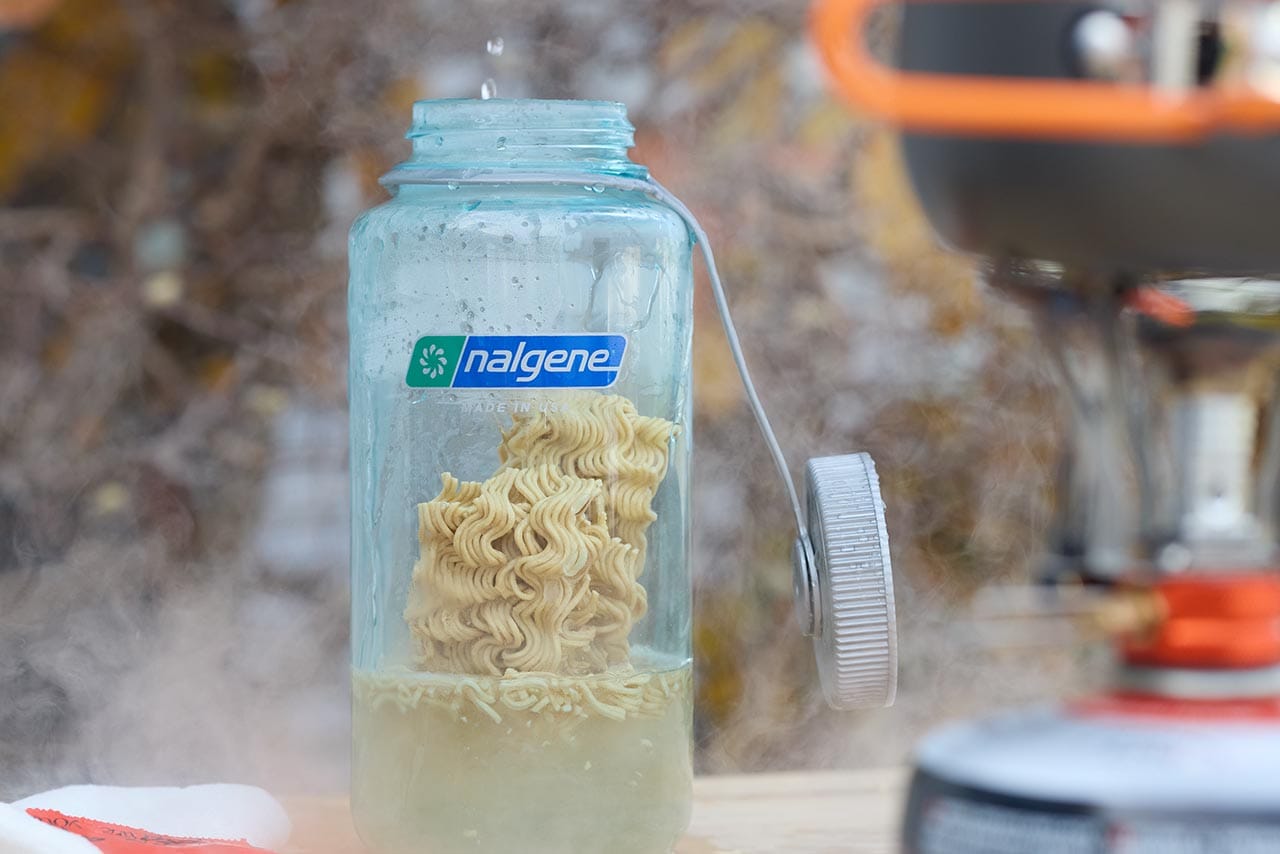
Yes — you can pour boiling water straight into a Nalgene bottle. Sustain® and HDPE, the main materials used in Nalgene bottles, are designed to handle high temperatures, including boiling water. For reference, water boils at 212°F (100°C), and both materials perform well under those conditions in real-world use.
Just to be clear: You can pour boiling water into your Nalgene, but you should never try to boil water in it. These bottles aren’t manufactured for direct heat or open flames.
That said, Nalgene bottles are still ideal for everything from hot drinks to backcountry meal prep. Unlike lower-grade plastics, they won’t warp or lose their shape over time when used correctly.
What Is the Temperature Limit for a Nalgene Bottle?
Here’s a quick breakdown:
- Sustain® Renew bottles: Safe for hot liquids, including boiling water (up to 212°F / 100°C) in everyday use
- HDPE bottles: Safe for hot water up to around 180–200°F (82–93°C); occasional boiling use is okay, but avoid prolonged exposure
- Dishwasher safe? Absolutely — top-rack recommended
As long as you’re using an authentic Nalgene bottle (not a knockoff), it’s built for the job.
Reminder: Plastic conducts heat more slowly than metal, but the bottle itself (and whatever’s near it) can still feel hot to the touch.
Ways to Use Hot Water in Your Nalgene
Hot water in your Nalgene is completely safe and seriously practical. Outdoor pros and everyday adventurers alike have figured out a bunch of smart ways to put that heat to work.
Here are a few of our favorites:
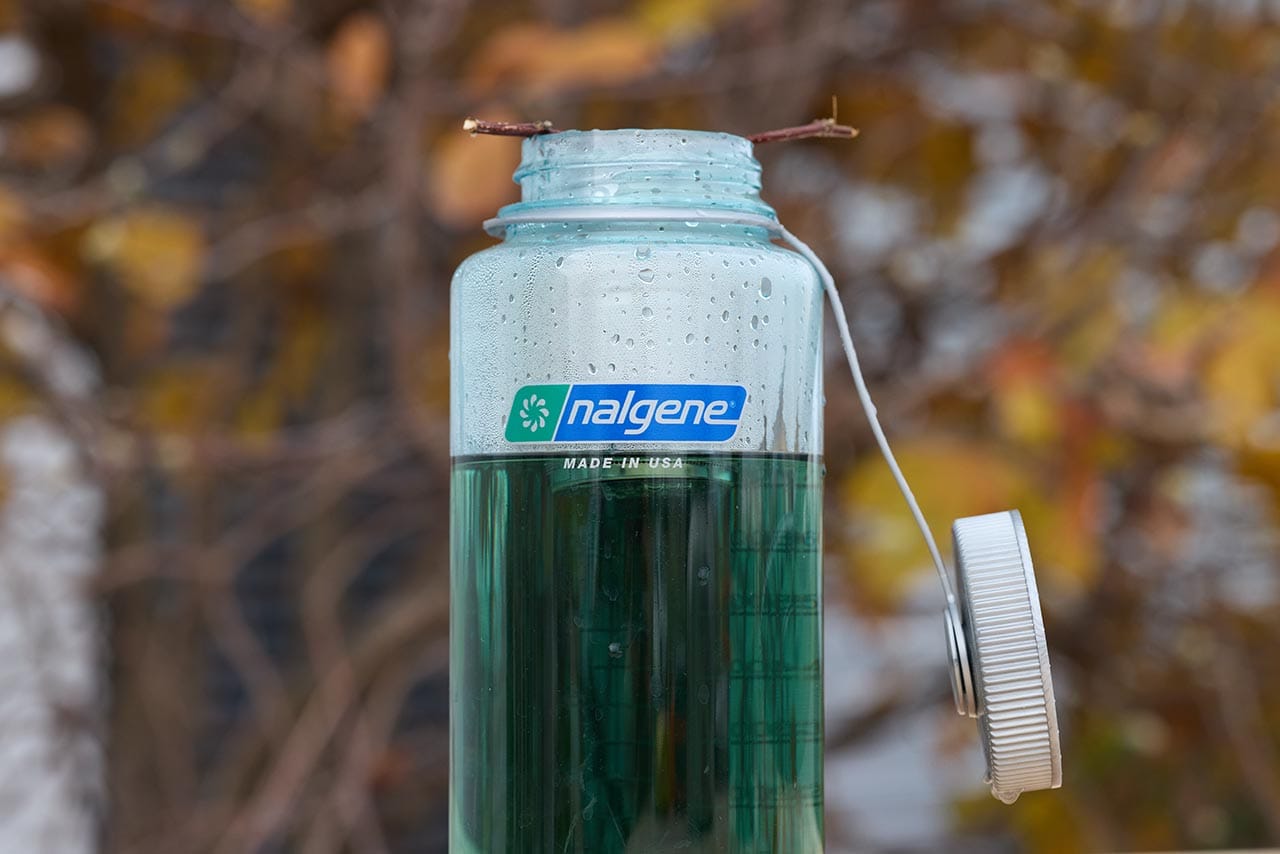
- Warm your sleeping bag
Fill your bottle with boiling water, screw the lid on tight (but don’t overtighten), and tuck it into your bag before bed. It acts as a backcountry hot water bottle — cozy, safe, and reusable. - Prep trail meals faster
Use your Nalgene to measure hot water before pouring straight into freeze-dried meal pouches, or mix it all directly in your bottle when cooking at camp. - Morning coffee or tea
Bring your favorite hot drink along for the hike. Nalgene bottles won’t hold onto flavors, so tomorrow’s soup won’t taste like today’s coffee.
- Soothe sore muscles
Wrap a hot water-filled Nalgene in a towel, and use it as a DIY heat pack after a long day on the trail. Soothing for backs, shoulders, and tired feet. - Emergency warmth
On extra-cold nights, an extra-hot-water Nalgene inside your jacket can help keep your core temp stable until you can get moving or find shelter.
Just make sure the lid is secure, and avoid resting it directly against bare skin. Hot water is still hot, after all.
Hot Water Risks + Nalgene Care Tips
While Nalgene bottles are built to handle heat, a little care goes a long way in keeping them safe and lasting for years.
Here’s what to watch out for:
- Check for wear and tear
Before using hot water, inspect your bottle. Deep scratches, cracks, or discoloration are signs that it’s time to replace it. Even the toughest bottles wear down, eventually. - Don’t seal it immediately
After pouring in boiling water, wait a few seconds before screwing on the lid. Steam builds pressure, and tightening the cap too soon can create a seal that’s tough to open (or cause leaks later). - Avoid direct flame or stove contact
Nalgene bottles can hold boiling water, but they’re not designed to be heated over a fire or camp stove. Doing so can warp the plastic or damage the bottle. - Clean it properly
Hot water use won’t ruin your Nalgene, but regular cleaning keeps it in top shape. Need a refresher? Here’s how to clean your Nalgene. - Handle with care in the cold
In freezing temps, a hot Nalgene bottle can help warm you up, but don’t leave it outside. Sudden temperature swings can stress even heat-resistant plastic.
Simple care, smart use. That’s how you get the most out of your bottle, year after year.
The Bottom Line on Boiling Water in Nalgene Bottles
Yes, you can safely put hot or boiling water in a Nalgene. That’s part of what makes it such a trusted companion for adventures of all kinds. Whether you’re warming up a sleeping bag, fixing a trail meal, or sipping something hot on a cold morning, your Nalgene bottle is up to the task.
Just remember:
- Use an authentic Nalgene made from Nalgene Sustain® or HDPE
- Avoid damaged or overly worn bottles
- Don’t tighten the lid right after pouring boiling water
- Clean it regularly to keep it fresh
Doing the small things right means your Nalgene can handle the heat (and everything else the trail throws at you).
Need a bottle that keeps up, hot or cold?
Pick up a Nalgene and take it anywhere the trail leads.
Shop Now — Need a bottle that keeps up, hot or cold?